Understanding Rollups in Crypto: Simplifying Layer 2 Solutions
In the world of cryptocurrency, scalability remains a critical issue, especially considering the $4.1 billion lost to DeFi hacks in 2024. With networks becoming bogged down by transaction volume, solutions are needed to maintain speed without sacrificing security. This is where rollups come into play, offering a layer 2 solution that optimizes blockchain efficiency.
This article aims to elucidate the concept of rollups, their function in improving blockchain performance, and their significance in the ever-evolving crypto ecosystem.
What are Rollups?
Rollups are an innovative technology designed to address the scalability challenges faced by blockchain networks. By bundling multiple transactions into a single proof, rollups allow blockchains to process significantly more transactions per second (TPS), effectively increasing their throughput.
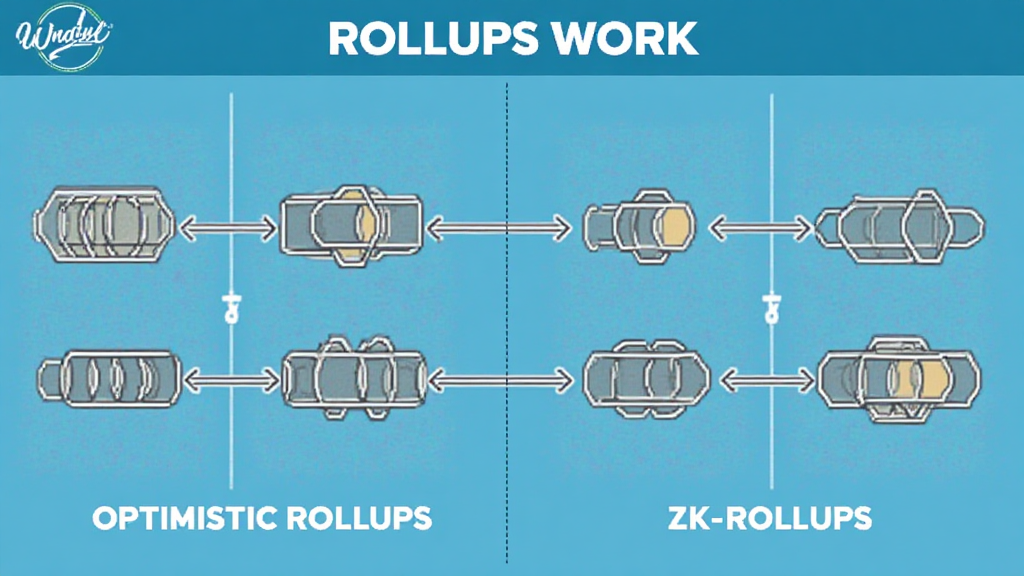
Types of Rollups
ong>Optimistic Rollups: ong> They assume that off-chain transactions are valid and only check for fraud when necessary. This method can lead to faster transaction speeds.ong>ZK-Rollups: ong> These use cryptographic proofs (zero-knowledge proofs) to validate transactions. They provide a higher level of security and data privacy.
How Do Rollups Improve Blockchain Scalability?
Imagine a traditional bank. If everyone goes there at the same time, queues can become long. Now picture a digital bank where transactions are bundled into one single entry. This is similar to what rollups accomplish in the blockchain space.
Rollups enable a larger user base to interact more smoothly without overwhelming the blockchain. Data from a 2025 survey highlights a 150% increase in transaction speeds for Ethereum when using rollup technology. This simple approach of aggregating transactions leads to increased efficiency.
Real-World Applications of Rollups
ong>DeFi Platforms: ong> Rollups have optimized the operations on major platforms like Uniswap, enabling faster and cheaper trades.ong>Gaming: ong> Blockchain games using rollups can process user transactions quickly, enhancing overall player experience.
Challenges and Limitations of Rollups
While rollups significantly enhance blockchain transaction efficiency, they are not without challenges. There can be complexities surrounding fraud proofs, especially in the case of Optimistic Rollups, where a dispute can delay transaction finality.
Comparative Analysis of Rollup Types
| Type | Speed | Security | Complexity |
|---|---|---|---|
| Optimistic Rollups | High | Moderate | Low |
| ZK-Rollups | Moderate | High | High |
Impact on the Vietnamese Market
The adoption of rollup technology has seen a surge among Vietnamese users, with growth rates in blockchain technology and crypto adoption reaching 75% in 2025. This is largely due to the increasing need for faster transaction solutions in both personal and business sectors.
Future of Rollups in Crypto
As the crypto landscape evolves, the role of rollups is expected to expand. They’re paving the way for future developments not only in Ethereum but across various blockchain platforms. The integration of rollups could foreseeably help in achieving scalability goals set for the year 2025.
To sum up, rollups offer a powerful solution to scalability issues in the blockchain sector. As more platforms adopt these technologies, users can expect faster transaction confirmations and enhanced security.
Conclusion
Understanding rollups is essential for anyone involved in the crypto space. By becoming familiar with these technologies, investors and users will be better equipped to navigate the evolving digital asset landscape. As the crypto community continues to innovate, solutions like rollups will be instrumental in advancing blockchain infrastructure and improving user experiences.
For more insights on blockchain technologies and how they impact your investments, visit cryptostarterlab.