Fibonacci Retracement Crypto Tutorial: A Comprehensive Guide
In the fast-paced world of cryptocurrency trading, understanding market movements can be the difference between profit and loss. According to recent data, with over $4.1 billion lost to DeFi hacks in 2024, investors are looking for reliable methods to secure their investments. In this enlightening tutorial, we will delve into the techniques of Fibonacci retracement, an essential tool for traders aiming to enhance their market analysis. By the end of this guide, you’ll be equipped to effectively apply Fibonacci retracement in your crypto trading strategies.
What is Fibonacci Retracement?
Fibonacci retracement is a popular tool used in technical analysis that helps traders identify potential reversal levels in the price of assets. The key Fibonacci levels are derived from the Fibonacci sequence, which is a sequence of numbers where each number is the sum of the two preceding ones. In trading, the most commonly used Fibonacci levels are 23.6%, 38.2%, 50%, 61.8%, and 100%.
Understanding the Fibonacci Sequence
To truly grasp Fibonacci retracement, it’s helpful to understand the Fibonacci sequence itself. The sequence starts with 0 and 1, and the following numbers are created by adding the previous two. This leads to numbers like 0, 1, 1, 2, 3, 5, 8, 13, 21, and so forth. These numbers have unique relationships that are used to determine retracement levels in trading.
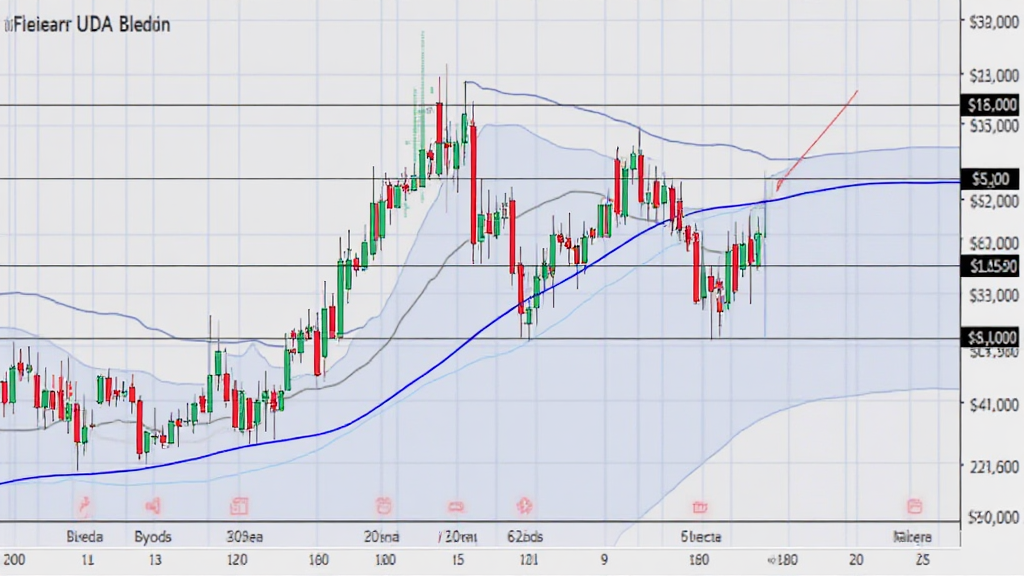
Why Use Fibonacci Retracement in Crypto Trading?
Using Fibonacci retracement allows traders to pinpoint areas where market corrections might occur, making it an invaluable aspect of technical analysis. Key reasons to incorporate Fibonacci retracement into your trading strategy include:
- Identifying Support and Resistance Levels: Fibonacci levels often coincide with key support and resistance levels, helping to determine where the price may reverse.
- Enhancing Trading Precision: Using Fibonacci retracement can improve your entry and exit points in trades.
- Market Psychology Insight: Many traders use Fibonacci retracement, making these levels significant as market psychology often aligns around them.
How to Apply Fibonacci Retracement
Applying Fibonacci retracement in crypto is relatively straightforward. Here’s a step-by-step approach to using this tool:
Step 1: Select a Chart
Open a price chart for your chosen cryptocurrency. Popular platforms like Binance and Coinbase provide advanced charting tools for this purpose.
Step 2: Identify a Trend
Determine if you are in an uptrend or downtrend. This can be done by looking at recent price movements.
Step 3: Draw Fibonacci Levels
If in an uptrend, select the lowest point on the chart and drag to the highest point. Conversely, for a downtrend, select the highest point and drag to the lowest point. Most charting software will automatically calculate the Fibonacci levels for you.
Step 4: Watch for Price Reactions
Monitor how the price reacts at these levels. Look for buying signals near your retracement levels during an uptrend or selling signals in a downtrend.
Common Mistakes to Avoid
While using Fibonacci retracement can be effective, there are common mistakes that traders often make:
- Ignoring the Trend: Always ensure you are applying Fibonacci retracement in the context of the overarching trend.
- Over-reliance on Fibonacci Levels: Use Fibonacci retracement in conjunction with other indicators to confirm signals.
- Inconsistent Application: Stick to your method for applying Fibonacci retracement to avoid confusion.
Examples of Fibonacci Retracement in Action
Let’s break down two practical examples of how Fibonacci retracement has worked in the crypto market:
Example 1: Bitcoin’s Bull Run
During Bitcoin’s rise from $20,000 to $30,000, many traders applied Fibonacci retracement. As the price approached the 23.6% level, a buying opportunity emerged. This behavior is observed widely, as many traders look at retracement levels for potential entry points.
Example 2: Ethereum’s Market Correction
When Ethereum dropped from $4,000 to $2,500, traders utilized Fibonacci retracement to identify the potential low. Observing a bounce off the 61.8% level provided a clear buying signal for many investors.
The Importance of Local Market Insights
As retail interest in crypto trading grows, particularly in emerging markets like Vietnam, understanding local data is vital. Recent statistics show that Vietnam’s user growth rate in cryptocurrency has skyrocketed by 36% in the past year. By incorporating relevant local market data into your analysis, you can fine-tune your strategies effectively.
Crypto Trading in Vietnam
In Vietnam, the adoption of cryptocurrencies is largely driven by the younger demographics. The growing trend suggests that many young entrepreneurs are looking towards blockchain technology and crypto as viable investment options. Integrating local insights can empower you to predict market movements accurately.
Conclusion
Fibonacci retracement is a powerful tool in the arsenal of crypto traders. With a solid understanding of its principles and applications, you can substantially enhance your trading efficiency. Remember to analyze market trends holistically, incorporating local insights to tailor your strategies. Always consult financial advisors when necessary, and remember, this guide doesn’t constitute financial advice. Explore these strategies, keep learning, and utilize Fibonacci levels to your advantage. The ever-evolving crypto market awaits!
By leveraging Fibonacci retracement, you’re not just enhancing your skills; you’re becoming part of a sophisticated trading community. For comprehensive guides and resources, visit cryptostarterlab.
About the Author
Dr. Alex Nguyen is a blockchain consultant with over 15 years of experience in financial technology. Having authored numerous papers on trading strategies and blockchain security, Dr. Nguyen has led the audits for several high-profile crypto projects.